
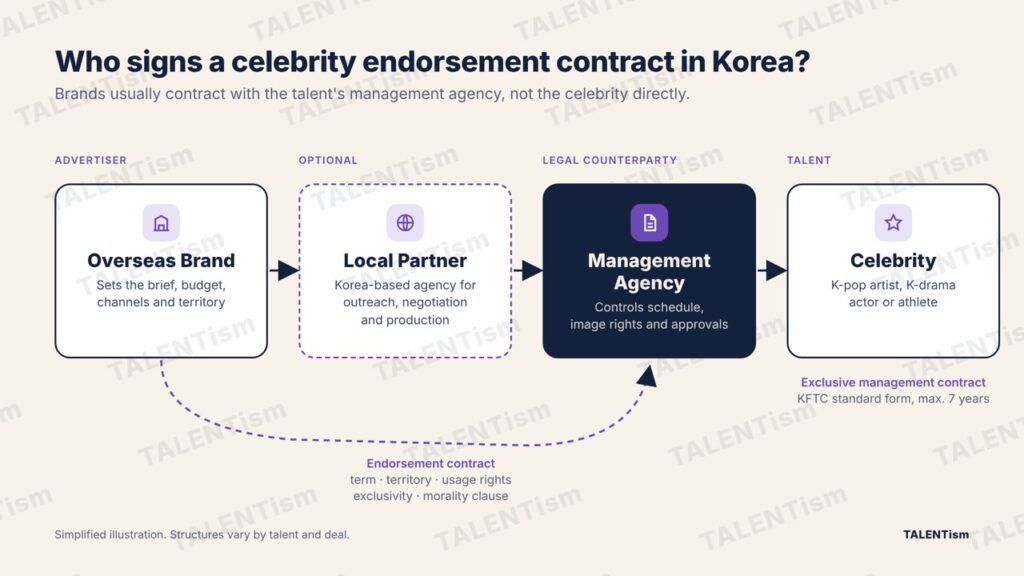
A celebrity endorsement contract in Korea works differently from what many overseas brands expect. In most cases, you do not negotiate with the star directly. Instead, you work with the talent’s management agency, which controls schedules, image rights and approvals. This guide walks through the process step by step. It also covers the clauses that matter most and the disclosure rules your campaign must follow.
Why a Celebrity Endorsement Contract in Korea Is Different
First, it helps to understand who actually signs. Korean actors, K-pop artists and many athletes are bound by exclusive management contracts. The Korea Fair Trade Commission (KFTC) publishes a standard exclusive contract for entertainers, and it caps these deals at seven years. As a result, the agency is usually your legal counterparty, not the celebrity.
Second, image control is strict. Agencies protect a star’s positioning across every brand they represent. Therefore, they review category fit, competing endorsements and creative direction before saying yes.
Third, Korean law now protects celebrity identity explicitly. An amendment to the Unfair Competition Prevention and Trade Secret Protection Act took effect on April 20, 2022. According to Shin & Kim, it was the first Korean law to expressly recognize the right of publicity. In short, using a famous name, face or voice commercially without consent can now be treated as unfair competition.
Step-by-Step: How a Celebrity Endorsement Contract Comes Together
Every deal varies, but most follow a similar path. Here is the typical sequence.
1. Define the brief before you shortlist
Start with your goals, target audience and channels. For example, a skincare launch on Olive Young needs a different face than a golf equipment brand. Also decide early whether you need a K-pop artist, a K-drama actor or a sports star.
2. Shortlist and check availability
Next, build a shortlist of three to five candidates. Then ask each agency about availability, existing category conflicts and schedule windows. Top talent often has filming or touring commitments that limit shoot dates.
3. Submit a formal proposal
Agencies expect a written proposal before any serious discussion. It should cover the brand, product, campaign period, territories, media plan and deliverables. A clear proposal speeds up internal review on the agency side.
4. Negotiate the celebrity endorsement contract terms
Once interest is confirmed, both sides agree on the key terms. These include the contract period, usage rights, shoot days, appearances and exclusivity. Fees are discussed at this stage, but they depend heavily on scope.
5. Finalize the contract and production plan
Finally, legal teams review the full agreement. After signing, production begins with a shoot plan, creative approvals and a release calendar.
Key Clauses in a Celebrity Endorsement Contract
The clauses below shape both your risk and your return. Review each one carefully with local counsel.
Term and territory
Specify the exact start and end dates. In addition, define the territory clearly. Wider territories expand the scope of the deal, so match territory to your real media plan.
Usage rights and media scope
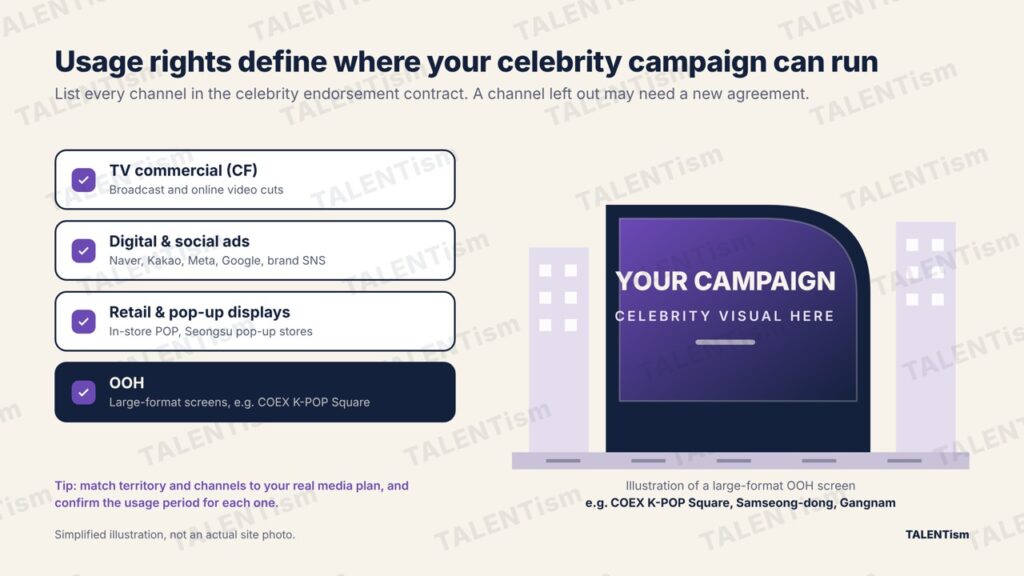
This clause defines where you can use the celebrity’s image. Common channels include TV commercials (known locally as CF), digital ads, social media, retail displays and OOH. For instance, a campaign might run on the COEX K-POP Square screen in Gangnam or at Seongsu pop-up stores. List every channel, because anything left out may require a new agreement.
Exclusivity and category conflicts
Most brands want category exclusivity during the term. That means the star cannot endorse a direct competitor. However, define the category narrowly and precisely. “Beauty” is too broad, while “facial sunscreen” is easier to enforce and negotiate.
Deliverables and appearances
Spell out shoot days, hours, social posts and event appearances. Moreover, agree on approval rights for photos and video. Agencies often request final approval over how the talent looks.
Morality and termination clauses
A morality clause lets you end the deal if the celebrity’s conduct damages your brand. Consequently, it is one of the most important protections in the Korean market. Public reputation can shift quickly, so define triggers, notice periods and refund terms.
Building Ad Disclosure Into a Celebrity Endorsement Contract
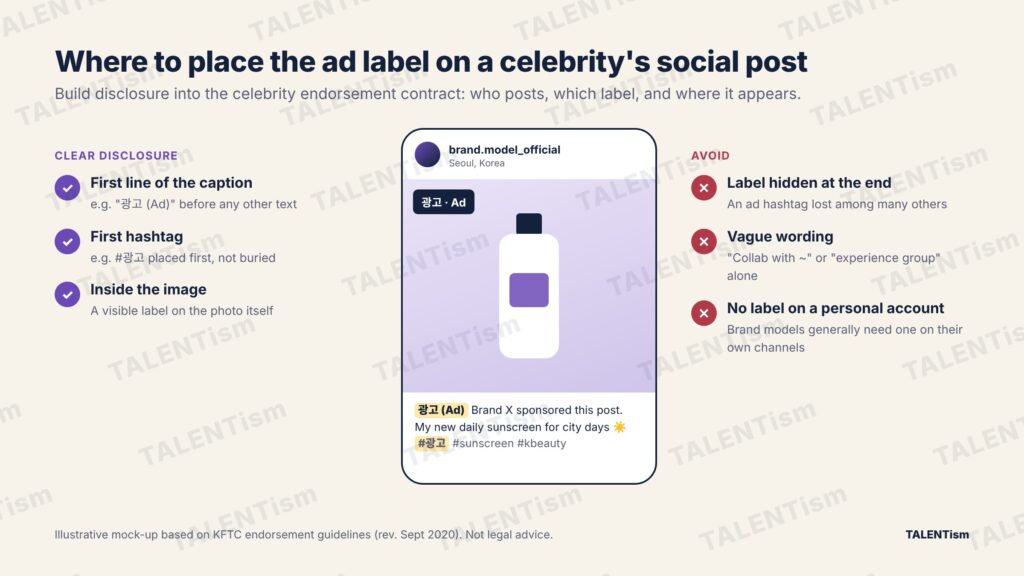
Disclosure is not optional. The KFTC revised its endorsement and testimonial guidelines from September 1, 2020. As reported by The Asia Business Daily, the rules require clear labels such as “advertisement” for paid content.
These rules matter for celebrity campaigns too. When a brand model promotes a product on a personal social account, disclosure is generally required. However, it may be omitted when the content is obviously an ad, such as official campaign photos or CF footage. Meanwhile, on Instagram the label should appear in the first line, the first hashtag or the image itself.
So, build disclosure into the contract. Name who posts, what label is used and where it appears. Never structure a campaign to hide the sponsor. Doing so creates legal risk and can damage trust with Korean consumers.
How to Get More Value From Your Celebrity Endorsement Contract
A signed contract is only the starting point. To maximize impact, connect the endorsement to the wider marketing mix.
- Pair it with influencer seeding. Creators can extend the campaign into reviews and tutorials. See our guide to Korean influencer seeding for how that works.
- Plan offline moments. Fan signings or pop-up appearances in areas like Seongsu or The Hyundai Seoul can drive foot traffic.
- Prepare Korean-ready infrastructure first. Make sure your Naver Brand Store, Kakao channel and customer service are live before launch day.
- Track results by channel. Separate KPIs for paid media, retail and social help you judge renewal options.
In other words, the endorsement works best when the market is ready to convert the attention it creates.
FAQ: Celebrity Endorsement Contracts in Korea
Who signs a celebrity endorsement contract in Korea?
Usually the celebrity’s management agency signs on their behalf. Most Korean entertainers have exclusive contracts that give the agency authority over advertising deals. Some athletes work through sports marketing agencies instead.
How long does a typical celebrity endorsement contract last?
Terms vary by brand and scope. Many deals run for a set campaign period, with renewal options built in. Shorter terms reduce risk, while longer terms can build stronger brand association.
Does a celebrity endorsement contract need an ad disclosure clause?
Yes, in many cases, and the contract should spell it out. KFTC guidelines require clear disclosure when a brand model promotes products on personal social channels. Obvious ad formats, such as official CF footage, may not need an extra label.
Can a foreign brand sign a Korean celebrity without a local partner?
It is possible, but it is often slow. Agencies prefer partners who understand Korean contract norms, approval processes and media planning. Many overseas brands work with a local agency such as TALENTism to manage outreach, negotiation and production in Korean.
What happens if a celebrity is involved in a scandal?
That depends on the morality clause. A well-drafted clause lets the brand pause or end the campaign and may include refund terms. Therefore, negotiate these protections before signing, not after a problem appears.
Conclusion
A celebrity endorsement contract in Korea rewards preparation. Know that agencies are your counterparty, and define usage rights and exclusivity precisely. Protect your brand with a clear morality clause, and build ad disclosure into every deliverable. Above all, connect the endorsement to channels, retail and customer service that are ready for Korean consumers. That way, star power turns into lasting brand growth.
References
- Shin & Kim — Right of publicity under Korea’s amended Unfair Competition Prevention Act
- Transatlantic Law International — Korea: legal protection against unauthorized use of public figures’ images
- The Asia Business Daily — KFTC disclosure rules for sponsored social content, effective Sept 1, 2020
- HanCinema — KFTC standard contract limits entertainer contracts to seven years